
Positive reinforcement in the workplace starts with something simple: noticing the good.
When recognition becomes part of everyday conversation, people show up differently. They collaborate more freely, share ideas with confidence, and bring out the best in one another.
At Gladly Network, we’ve seen how small moments of appreciation can quietly reshape an entire culture.
What Changes When Positive Reinforcement Works
Motivation Surges When Recognition Becomes Routine
Positive reinforcement transforms workplace motivation in measurable ways. Harvard Business Review research demonstrates that employees who receive regular recognition show 23% higher engagement compared to those who don’t. The key lies in frequency and specificity. Teams that implement weekly recognition sessions see motivation scores increase within three months.
The dopamine release that recognition triggers creates behavioral changes that last. When managers acknowledge specific achievements within 24 hours, employees repeat desired behaviors more frequently. Targeted praise generates substantial performance improvements that compound over weeks. That emotional lift is rooted in how our brains connect recognition to well-being. Tools like ImpactSuite reflect this connection by helping employees build emotional resilience through reflection and guided wellness practices.
When organizations support both achievement and mental health, recognition becomes more than a motivational tactic, it becomes a foundation for lasting engagement and healthier workplace relationships.
Performance Quality Jumps Through Strategic Recognition
Positive reinforcement directly impacts work quality through heightened focus and commitment. Organizations that implement structured recognition programs report higher performance levels. This improvement stems from employees who understand exactly which behaviors drive success.
Quality metrics improve when recognition targets specific skills and outcomes. Teams that receive performance-based acknowledgment reduce error rates within six months. Workplaces with positive environments achieve higher productivity rates, largely attributed to employees who feel confident in their contributions and exceed baseline expectations.
Retention Rates Strengthen With Consistent Appreciation
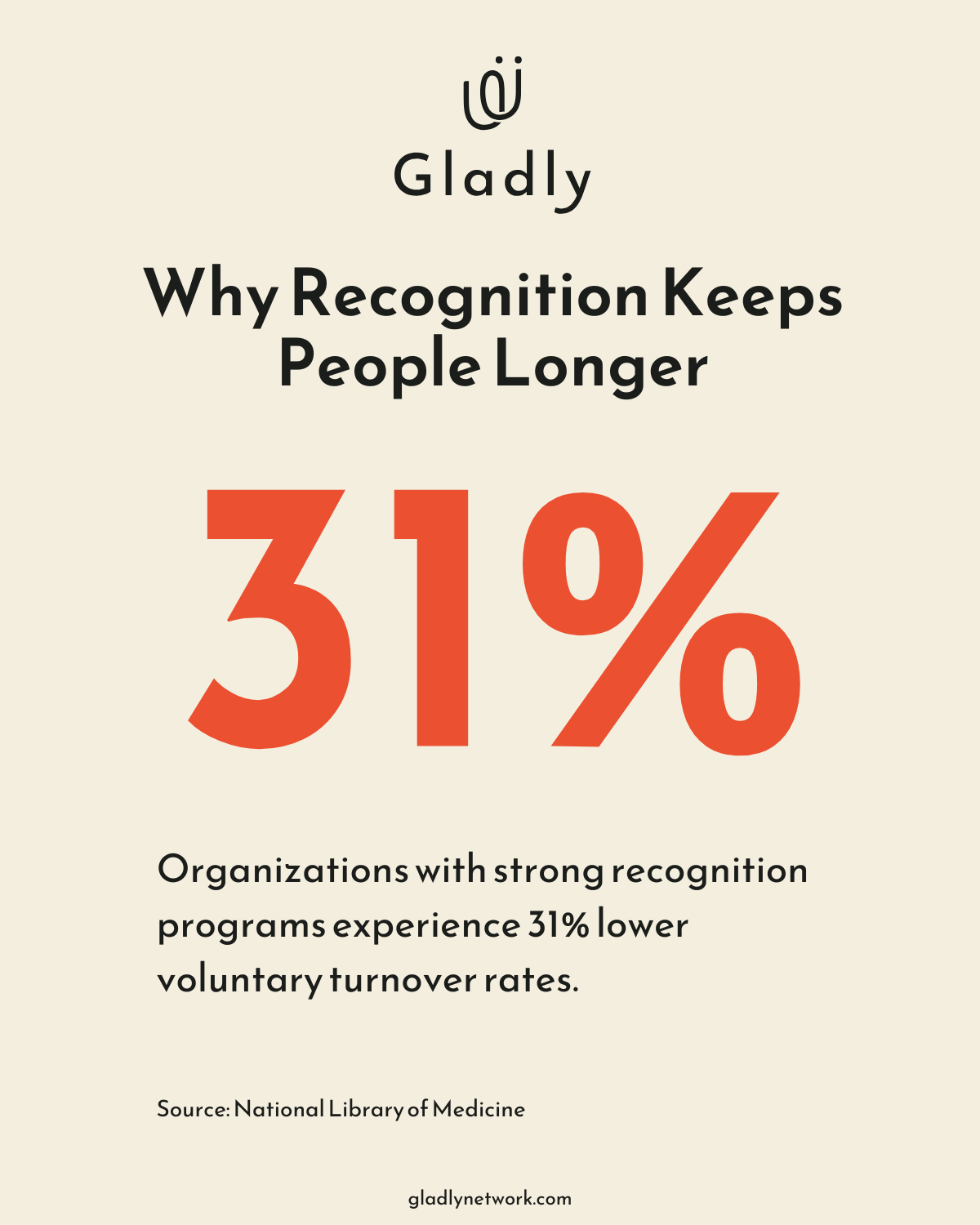
Employee turnover drops dramatically when positive reinforcement becomes systematic. Companies with robust recognition programs experience 31% lower voluntary turnover rates and reduce replacement costs that can reach significant percentages of annual salary for skilled positions.
Absenteeism decreases in organizations that prioritize employee recognition. When workers feel valued, they demonstrate stronger commitment to attendance and team responsibilities. Companies with established recognition programs maintain higher satisfaction scores and build stronger employee loyalty that translates into measurable business outcomes.
These performance improvements create the foundation for successful recognition programs, but implementation requires specific strategies and approaches that maximize impact across different employee preferences and organizational structures. Recognizing small victories each day helps maintain momentum and supports continuous improvement efforts.
Which Recognition Strategies Actually Work
Programs That Generate Results Through Peer Recognition
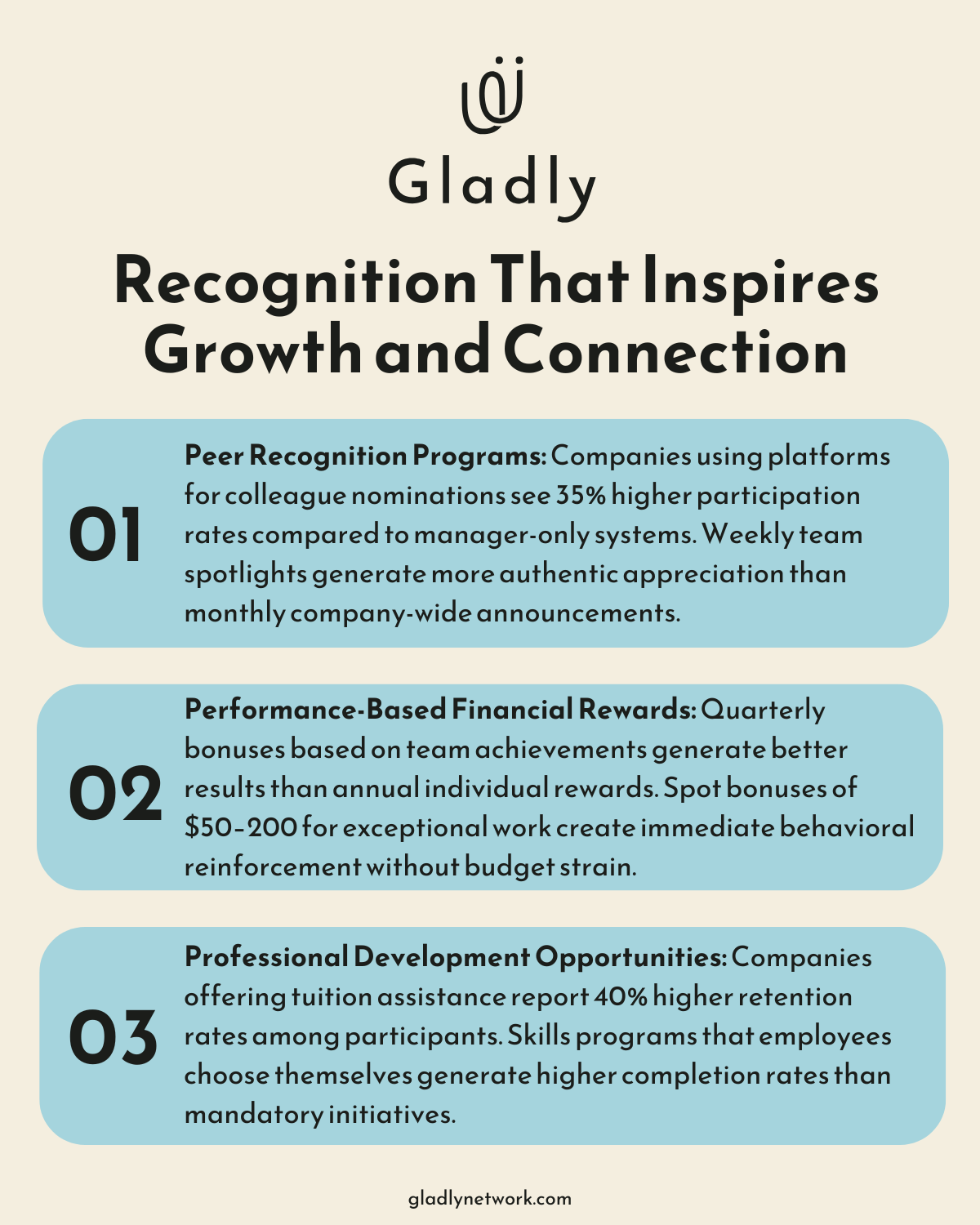
Peer-to-peer recognition programs outperform top-down approaches in engagement metrics. Companies that use platforms where employees nominate colleagues see 35% higher participation rates compared to manager-only recognition systems.
To make recognition consistent rather than spontaneous, many organizations are turning to structured systems that help teams track and share appreciation more effectively. Platforms like Motivosity support this process by giving employees simple ways to acknowledge one another and by helping leaders reinforce positive habits at scale. Integrating such tools ensures recognition remains timely and meaningful, sustaining engagement even as teams grow and communication becomes more complex.
Teams that implement structured peer recognition reduce internal competition while they increase collaboration scores. When employees control recognition frequency, appreciation becomes genuine rather than obligatory. Organizations report that peer-nominated achievements carry more weight with recipients because colleagues understand daily work challenges better than distant management.
Financial Rewards That Match Performance Impact
Performance bonuses work best when companies tie them to measurable outcomes rather than subjective evaluations. Companies that link financial incentives to specific metrics see improved performance according to research from Condy, Clark & Stolovitch. Quarterly bonuses based on team achievements generate better results than annual individual rewards because they maintain momentum throughout the year.
Spot bonuses of $50-200 for exceptional work create immediate behavioral reinforcement without budget strain. Organizations that combine small financial rewards with public recognition achieve compound effects that pure monetary incentives cannot match. The amount matters less than the delivery speed – bonuses delivered within one week of achievement show stronger behavioral impact than delayed larger payments.
Development Opportunities That Build Long-term Value
Professional development serves as powerful recognition while it builds organizational capacity. Companies that offer tuition assistance report 40% higher retention rates among participants (with 87% of Millennials prioritizing such opportunities). Skills programs that employees choose themselves generate higher completion rates than mandatory development initiatives.
Conference attendance and certification sponsorship create recognition that extends beyond the workplace. When organizations invest in employee growth, they signal confidence in individual potential while they build future capabilities. Mentorship programs where high performers guide others combine recognition with knowledge transfer, which creates sustainable motivation systems that benefit entire teams.
These recognition strategies require careful implementation to maximize their effectiveness. Success depends on how well organizations structure these programs and train their leaders to execute them consistently. Employee recognition and rewards programs are powerful tools for boosting morale and productivity when implemented with clear objectives and consistent execution.
How Do You Build Recognition Programs That Actually Work
Start With Measurable Objectives That Drive Behavior
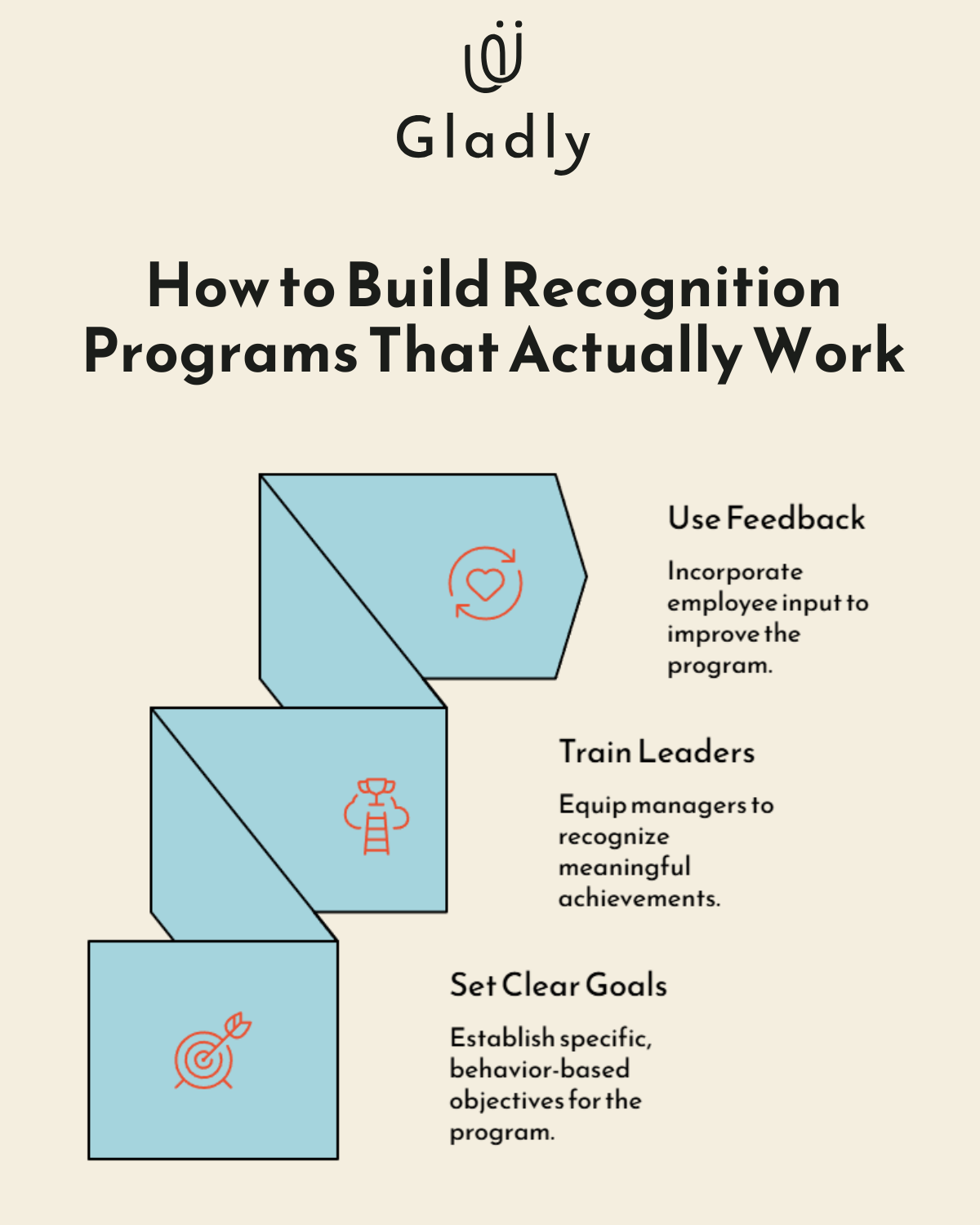
Successful recognition programs begin with specific performance metrics rather than vague appreciation goals. Organizations that define recognition triggers see higher program participation rates compared to those with general guidelines. Set recognition criteria tied to measurable outcomes: customer satisfaction scores above 4.5, project completion within deadlines, or peer collaboration ratings that exceed team averages. Companies achieve better results when they establish recognition frequency targets (such as three acknowledgments per employee monthly) rather than leave appreciation to chance.
Effective programs require clear communication about recognition standards before implementation. Teams that understand exactly which behaviors earn recognition show improved performance within eight weeks. Managers need written guidelines that specify recognition scenarios, timing requirements, and appropriate reward levels. Organizations report stronger program adoption when employees know recognition criteria upfront rather than discover them through trial and error.
Train Leaders to Recognize Impact Over Activity
Manager training determines recognition program success more than budget allocation or technology platforms. Companies that invest 16 hours in recognition training for supervisors see employee satisfaction scores increase by 27% within six months. Training must focus on identification of achievement impact rather than busy work. Managers learn to recognize problem-solving initiatives, team collaboration improvements, and customer service excellence that drives business results.
Effective training programs teach managers to deliver specific praise within 24 hours of achievement. Generic appreciation loses impact compared to detailed acknowledgment of contributions. Organizations achieve better outcomes when they train managers to connect recognition with business objectives and explain why specific behaviors matter to team success. Regular coaching sessions that review recognition delivery help managers improve their acknowledgment skills and maintain program momentum.
Track Program Effectiveness Through Direct Employee Input
Employee feedback reveals recognition program weaknesses faster than performance metrics alone. Companies that conduct monthly pulse surveys about recognition effectiveness identify improvement opportunities within 30 days. Successful organizations track recognition frequency, perceived fairness, and motivation impact through anonymous feedback systems. Teams respond better to programs when they can influence recognition methods and timing through regular input sessions.
Direct measurement beats assumption-based program adjustments every time. Organizations that survey employees about recognition preferences create more effective appreciation systems. Quarterly feedback sessions reveal whether recognition frequency meets employee expectations and identify managers who need additional training support. The likelihood of attrition decreased when employees received at least one nomination monthly. Companies achieve sustained recognition success when they adjust programs based on employee responses rather than management preferences.
Recognition That Comes Full Circle
Positive reinforcement in the workplace is about creating a culture where appreciation becomes second nature. When recognition flows freely, people show up with more empathy, energy, and purpose. The smallest moments of gratitude can spark change that lasts far beyond a single project or deadline.
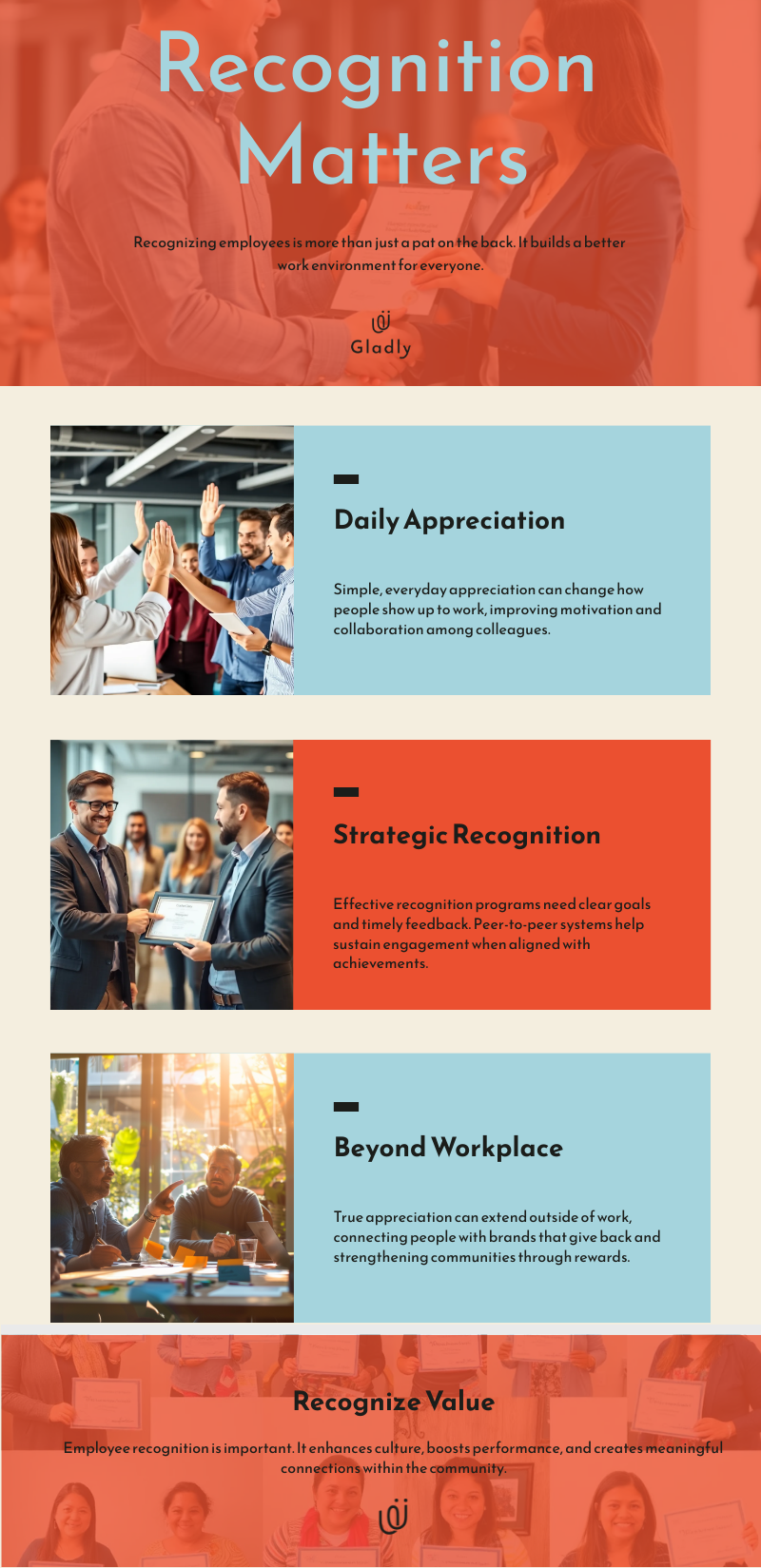
At Gladly Network, we believe recognition should extend beyond the workplace. Our platform connects people and companies to brands that give back, offering rewards and discounts that celebrate doing good. Each purchase, like each thank-you, is a way to strengthen the connections that make communities thrive. Because when we recognize value, in people, in purpose, and in everyday choices, good has a way of coming full circle.