
Employee rewards programs are a game-changer for businesses. They boost motivation, attract top talent, and shape company culture.
At Gladly Network, we’ve witnessed how the right recognition strategies can energize teams and strengthen company culture. In this guide, we’ll walk through how to design and manage rewards programs that truly make an impact on both employees and business outcomes.
Why Employee Rewards Programs Matter
Boosting Motivation and Productivity
Employee recognition and rewards programs significantly boost employee engagement, while fairness and involvement also positively contribute. When employees feel valued, they work harder. It’s that simple.
The key is to make rewards meaningful. One company saw a jump in sales after introducing a points-based system where employees could choose their own rewards.
Winning the Talent War
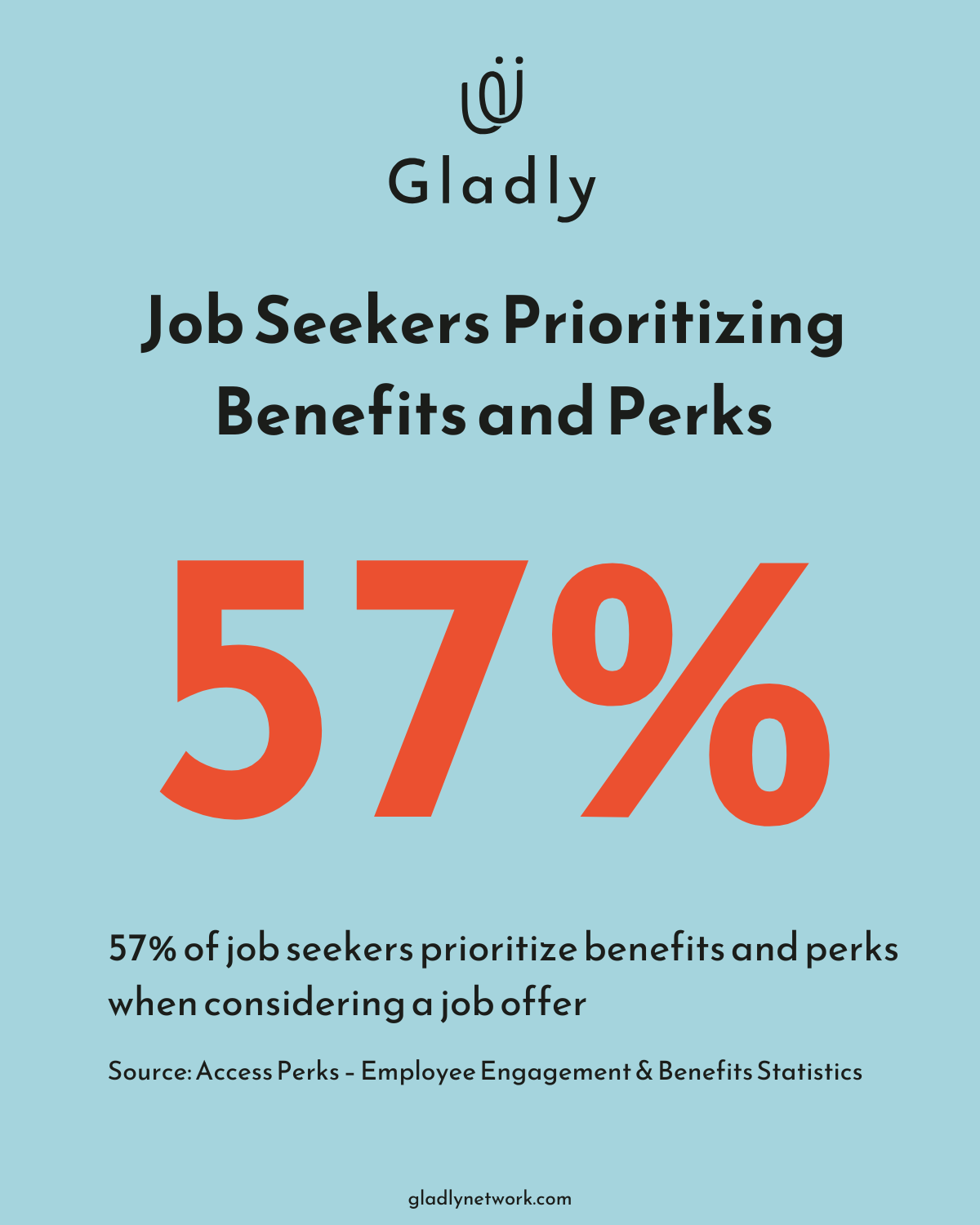
Attracting and keeping top talent is tough. A solid rewards program can give you an edge. According to a survey, 57% of job seekers say benefits and perks are among their top considerations before accepting a job.
Some companies have reduced turnover by implementing targeted reward strategies. One tech firm saw applications for open positions increase after they started showcasing their rewards program in job ads.
Shaping Company Culture
Your rewards program says a lot about what you value as a company. If you reward teamwork, you’ll foster collaboration. If you recognize innovation, you’ll encourage creativity.
A healthcare sector company used their rewards program to reinforce their commitment to patient care. They saw patient satisfaction scores rise in just six months.
Customizing for Maximum Impact
Every company is unique, and so should be its rewards program. What works for a tech startup might not fit a traditional manufacturing company. Try to tailor your program to your specific industry, company size, and employee demographics.
For example, a flexible work schedule might be a highly valued reward in a company with many working parents. In contrast, professional development opportunities might be more appealing in a field with rapid technological advancements.
Measuring Success
To ensure your rewards program is effective, you need to measure its impact. This could include tracking metrics like employee engagement scores, productivity levels, and turnover rates. (You might also consider conducting regular employee surveys to gather feedback.)
One retail company found that after implementing a comprehensive rewards program, their employee engagement scores increased.
As we move forward, let’s explore the key elements that make employee rewards programs successful. Understanding these components will help you design a program that not only rewards your employees but also drives your business forward.
What Makes Employee Rewards Programs Effective?
At Gladly Network, we know successful employee rewards programs share key elements. These components ensure your program recognizes employees and drives business success.
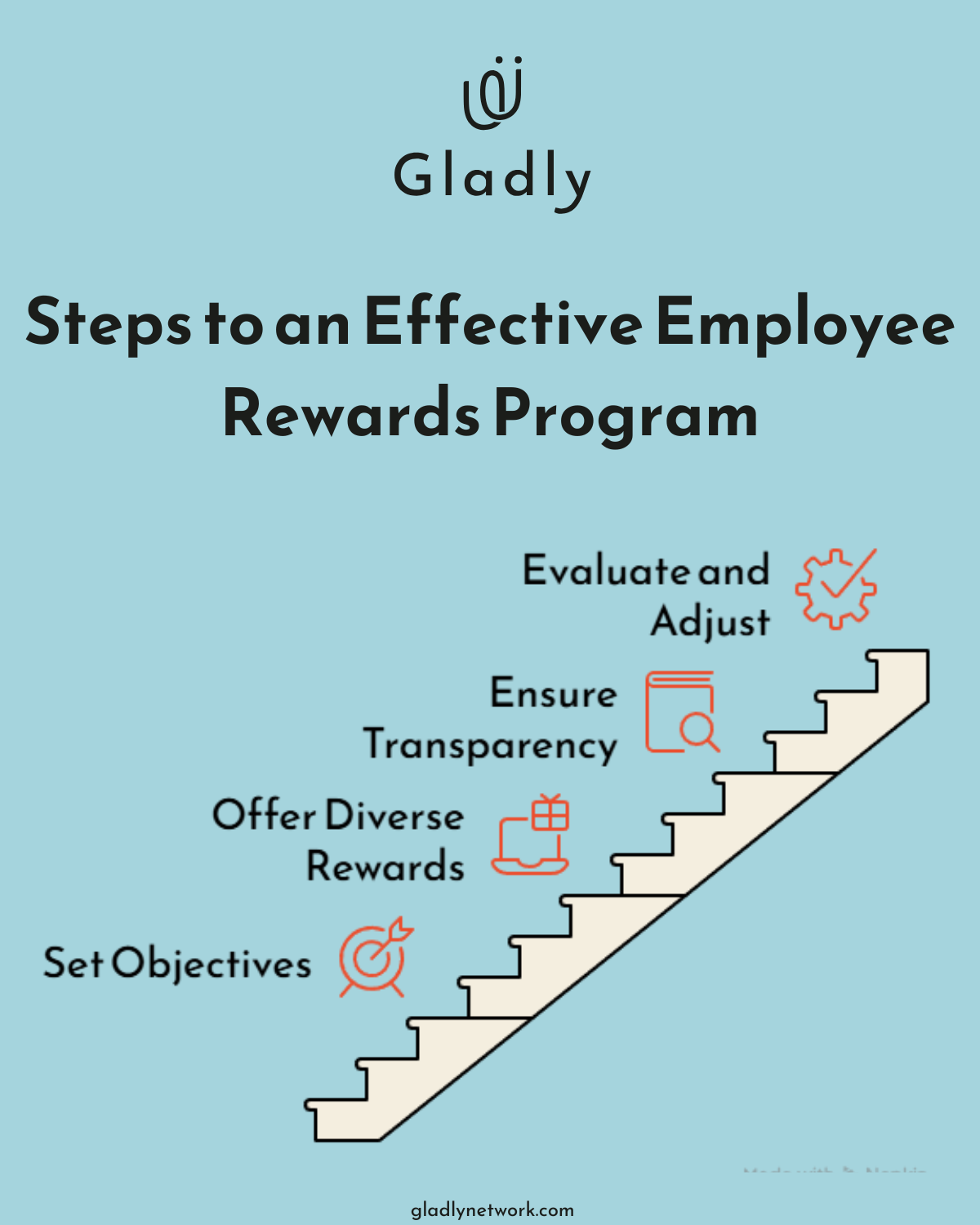
Set Clear, Measurable Objectives
Your rewards program needs a clear purpose. Do you want to boost productivity, reduce turnover, or improve customer satisfaction? Define specific, measurable goals. For example, try to increase employee engagement scores by 15% within six months or reduce turnover by 20% in a year.
A tech company set a goal to improve their Net Promoter Score (NPS) by 10 points through their rewards program. They tied rewards to customer feedback, which resulted in a 12-point NPS increase within a year.
Offer Diverse, Personalized Rewards
One size doesn’t fit all for rewards. Offer various options to cater to different preferences and demographics. This could include monetary bonuses, extra time off, professional development opportunities, or experiential rewards.
A manufacturing firm saw participation in their rewards program jump from 60% to 85% when they introduced a points-based system. Employees could redeem points for a wide range of rewards (from gift cards to charitable donations).
Ensure Transparency and Fairness
Employees need to understand how they can earn rewards and see that the system is fair. Clearly communicate the criteria for rewards and make the process transparent. Regular updates on who receives recognition and why can foster trust and motivation.
Companies use leaderboards and public recognition platforms to great effect. One retail chain saw a 30% increase in sales after they implemented a transparent, points-based system where they regularly highlighted top performers.
Continuously Evaluate and Adjust
Your rewards program should evolve with your business and employee needs. Regularly collect feedback through surveys or focus groups. Analyze program data to see what works and what doesn’t.
A healthcare provider found that their initial focus on individual performance hindered teamwork. They adjusted their program to include team-based rewards, which resulted in improved collaboration and patient outcomes. Studies have shown that 57% of cases identified a statistically significant improvement in patient satisfaction associated with team-based care.
An effective rewards program requires ongoing attention and refinement. The next section will explore how to implement and manage these programs successfully, ensuring they continue to motivate and engage your workforce over time.
How to Launch Your Employee Rewards Program
Gather Employee Input
Start your program design with employee feedback. Use anonymous surveys to collect honest opinions about preferred reward types, recognition frequency, and program structure. Workplace recognition motivates, provides a sense of accomplishment and makes employees feel valued for their work.
Supplement surveys with focus groups or one-on-one interviews. This personal approach can uncover nuanced preferences that surveys might miss.
Establish a Smart Budget
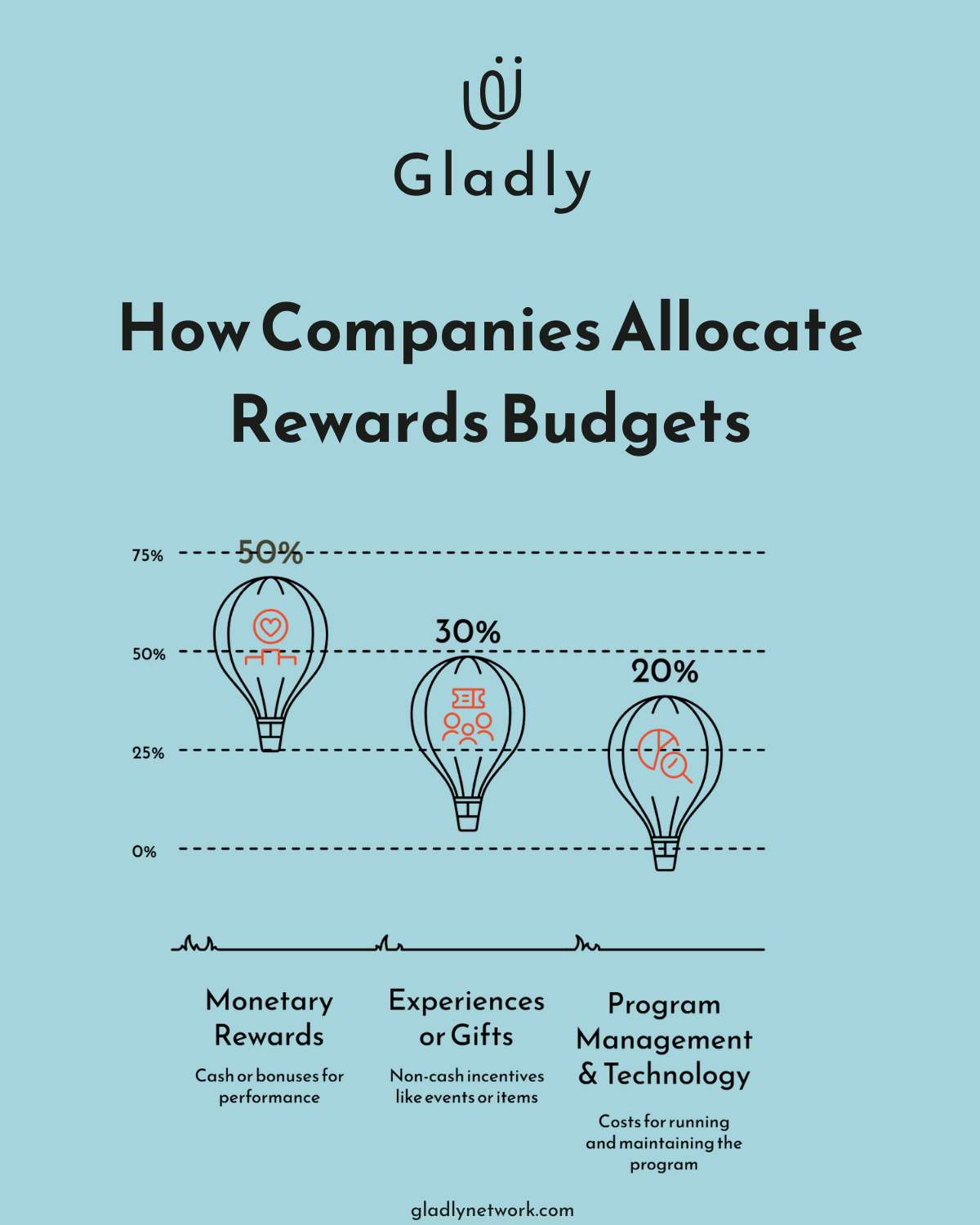
Your budget determines your program’s scope. Try to allocate 1% or more of your payroll to rewards and recognition. Adjust this figure based on your company’s size and financial situation.
Divide your budget into categories. For example:
- 50% for monetary rewards
- 30% for experiences or gifts
- 20% for ongoing program management and technology
This strategy ensures a balanced program that caters to various preferences.
Utilize Technology
The right technology can make your program succeed. Look for platforms that offer:
- User-friendly interfaces for employees and managers
- Real-time recognition capabilities
- Data analytics for program tracking
- Integration with existing HR systems
Companies often struggle with low participation rates until they switch to user-friendly platforms. A mid-size tech firm experienced a 60% increase in program engagement after implementing a mobile-first recognition app.
One powerful option for companies looking to integrate technology into their recognition efforts is Motivosity, a people-first platform built to make employee recognition simple and genuine. Motivosity allows organizations to automate rewards, create real-time recognition opportunities, and build a culture of connection that goes beyond routine surveys.
By giving managers the right tools and employees an easy way to celebrate one another, the platform helps ensure participation stays high and recognition feels authentic, exactly the kind of engagement boost that makes a rewards program successful
Train Your Managers
Managers serve as frontline ambassadors for your rewards program. Invest in thorough training to ensure they can effectively recognize and reward their team members.
Training should cover:
- The importance of timely recognition
- How to write meaningful recognition messages
- Avoiding bias in reward distribution
- Using the chosen technology platform
A retail chain saw a 25% increase in employee satisfaction scores after implementing a comprehensive manager training program focused on recognition.
Communicate Clearly and Frequently
Launch your program with enthusiasm. Host a company-wide event to introduce the program, explain its mechanics, and generate excitement. Follow up with regular communications through email updates, intranet posts, or physical posters in the workplace.
Maintain transparency about how employees earn and receive rewards. Share success stories to maintain high enthusiasm. A manufacturing company saw participation rates jump from 40% to 75% after they began sharing weekly recognition highlights.
The Power of Employee Rewards
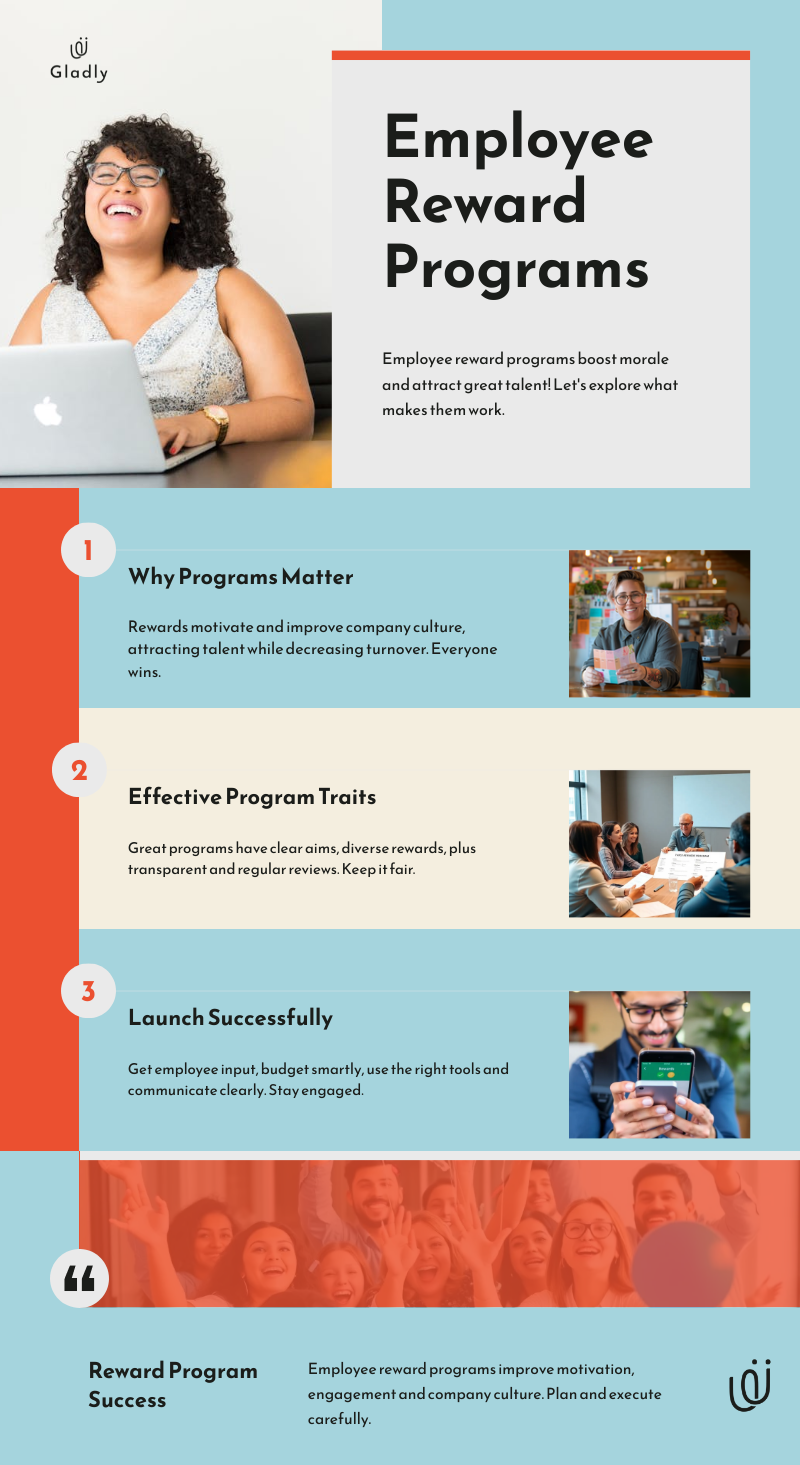
Employee rewards programs play a direct role in business success. They inspire motivation, attract top talent, and strengthen company culture. When recognition is supported by meaningful perks, companies often see measurable gains in productivity, engagement, and retention.
Gladly Network makes this easier. Our free platform connects businesses with exclusive perks from purpose-driven brands, giving you simple ways to reward employees without extra cost. From wellness and lifestyle benefits to unique partner offers, every reward feels personal and impactful.
Recognizing and rewarding people creates stronger communities. The same principle applies in the workplace, where thoughtful rewards help build trust, improve performance, and create an environment where both employees and organizations thrive.