
Self-care can feel like one more obligation on an already full day. When time is tight, the problem usually isn’t motivation; it’s that most “wellness routines” ask for more energy and space than real life allows.
This guide is built for busy schedules. Instead of adding a whole new routine, it focuses on micro-rituals: tiny moments of care you can fold into what you already do, mornings, transitions, meals, and wind-down time. Practiced consistently, these small resets can shift how you feel day to day.
Use this as your home base. Start with one idea, keep it simple, and come back whenever you need a realistic reset.
A Realistic New Year Reset for Busy Women
Think of this as a reset you can do inside your current schedule. The list is organized around real-life pressure points—when energy drops, when stress spikes, and when the day refuses to slow down. Each idea takes minutes, not hours, and works best when you choose one or two to repeat for a week before adding more.
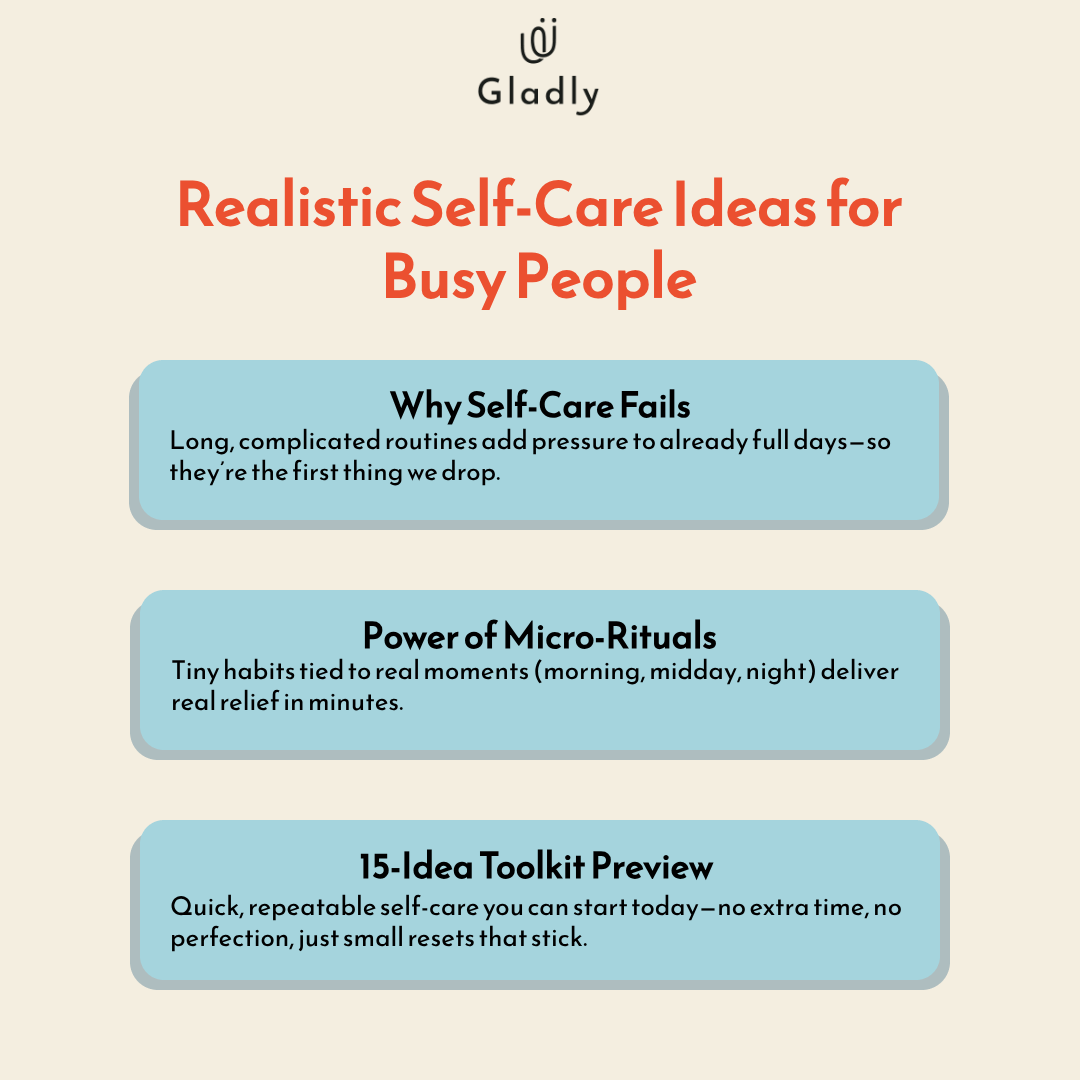
Why Traditional Self-Care Fails Busy Lives
Wellness practices become yet another task on our overflowing to-do lists.
The mental load of managing household responsibilities alongside career demands leaves little space for lengthy yoga sessions. Shopify reports that 88% of global consumers believe their personal care routines positively impact their health. The challenge is finding the time.
Small Rituals Beat Big Plans
Micro-rituals succeed where elaborate plans fail because they attach to existing routines. Rather than requiring extra time, they transform moments you already have.
During a particularly hectic week last March, we found that five minutes of deep breathing noticeably lowered our stress. This approach aligns with Gladly’s holistic wellness definition that treats physical, mental, and emotional health together. The Global Wellness Institute confirms that small, manageable practices create significant improvements when practiced consistently.
Your 15-Idea Toolkit Preview
Ready for practical solutions you can implement today? Our toolkit features 15 micro-rituals organized by morning, midday, and evening timeframes.
Each idea takes under five minutes with zero special equipment needed. We’ll highlight optional tools from Gladly partners that complement these practices—simple additions that enhance your experience without creating dependency.
Why Micro Self-Care Works When Life Is Full
Elaborate wellness plans often demand too much time and energy, so they collapse when stress rises. We need strategic rest as a learned skill that supports us through challenging periods.
Big routines break under real schedules
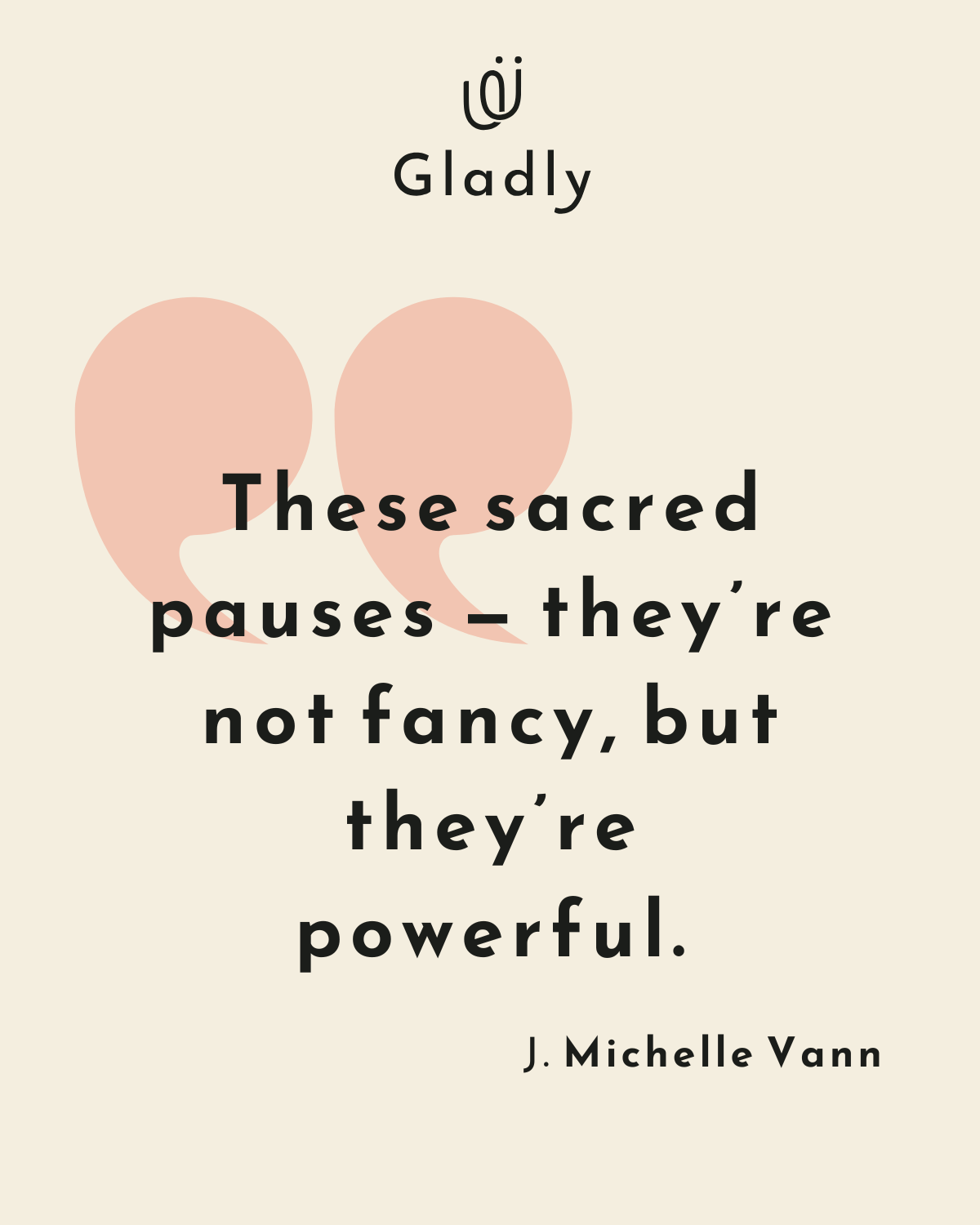
Elaborate wellness plans often demand too much time and energy, so they collapse when stress rises. We need strategic rest as a learned skill that supports us through challenging periods. And as Gladly Voice J. Michelle Vann reminds us, small pauses don’t have to be elaborate to matter: “these sacred pauses — they’re not fancy, but they’re powerful.”
Low-Friction Habits Stick
Attach care to moments you already own. Last September, we added short lunch walks and found they required almost no extra time. A 2025 study shows small self-compassion practices boost resilience during stressful periods.
Consistency Beats Intensity
Small daily doses create a stable foundation for well-being. A one-minute morning check-in, practiced consistently, reshapes habits more effectively than occasional lengthy sessions.
15 Self-Care Ideas That Actually Work
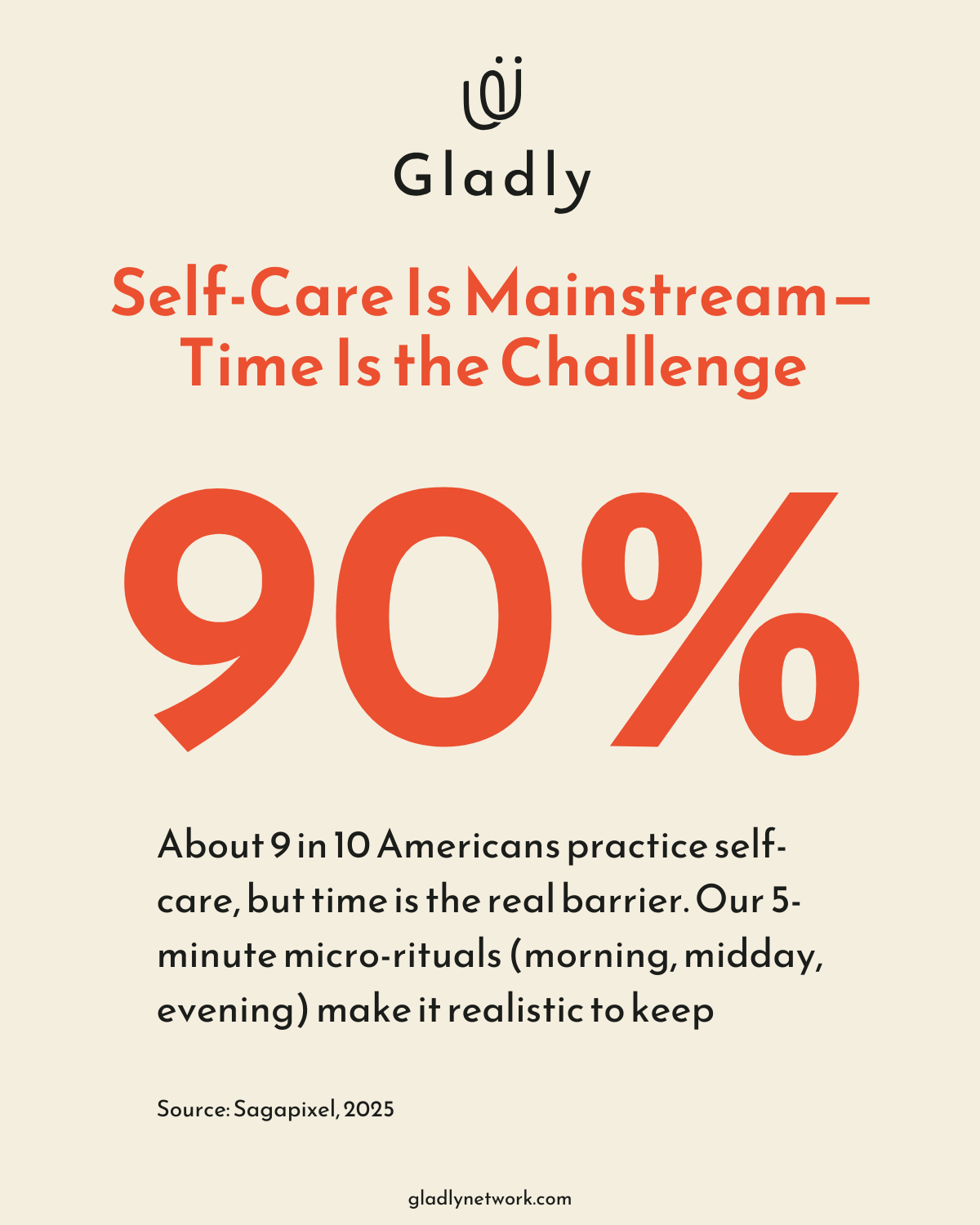
With 90% of Americans practicing self-care, finding effective strategies matters more than ever. Our toolkit actually breaks down into morning, midday, and evening micro-rituals. Each practice takes five minutes or less. These fit naturally into existing routines, making self-care realistic rather than aspirational.
Morning Self-Care: Energy Boosters
The first moments after waking set your day’s tone. These four practices create lasting benefits throughout the day:
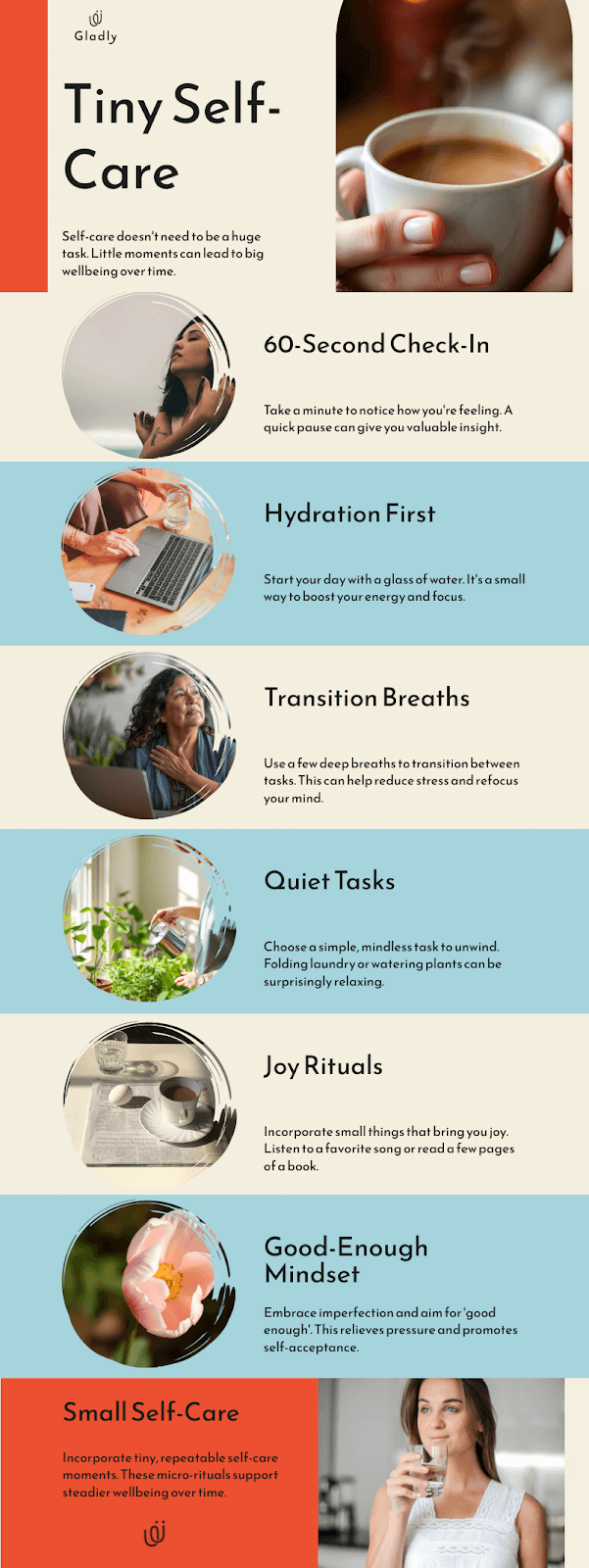
- 60-Second Check-In: One quiet minute before reaching for the phone helps clear priorities. Simply ask: “How do I feel? What do I need today?”
- Hydration First: We recommend drinking a full glass of water before coffee or tea. Women need about 9 cups of fluids daily, while men need 13 cups.
- Shower Reset: Turn showers into a nervous system reset by alternating between warm and cool water. This practice supports the nervous system by activating parasympathetic responses—the body’s natural calming mechanism. For busy mornings, Hello Health offers optional, doctor-formulated wellness supports that make daily self-care simpler to maintain.
- Comfort Clothing: Choose one comfort-forward element in your outfit—even on professional days. Comfrt’s slightly weighted essentials are designed to feel calming on the body, like a wearable exhale, so you get a grounding tactile cue while you move through hectic mornings. It’s an easy, low-effort form of self-care you can carry with you all day.
Midday Self Care: Stress Relief
By midday, stress often peaks for many of us. These five micro-rituals offer quick relief:
- Two-Minute Nature: Step outside for fresh air, even just two minutes. We’ve found it helpful to notice three things: something you see, hear, and feel.
- Future-Self Favor: Complete one small task your evening self will thank you for. Our team often clears desks, preps dinner ingredients, or sends that email we’ve been avoiding.
- Default Snacks: Prepare grab-and-go options that actually nourish you. Follow our hydration and nutrition tips for balanced choices. The wellness industry shows 1 in 5 consumers now prefer personalized approaches. For instance, Aloha Bars make nutritious options easier when time feels tight.
- Transition Breaths: Between meetings or tasks, take three deep breaths with longer exhales than inhales. This simple practice resets our focus.
- Micro-Boundary: Practice saying “I need to check my calendar” before committing to new requests. This creates space for intentional decisions.
Evening Self Care: Recovery Rituals
Evenings offer precious recovery time for busy people. These practices help you transition from doing to resting:
- Quiet Task: Choose one analog activity that doesn’t involve screens. We often fold laundry, water plants, or tidy one small area.
- Emotional Check-In: Take two minutes for a body scan to notice where tension hides. If you want a little structure, tools like ImpactSuite offer gentle, guided check-ins and short meditations that help you downshift without overthinking it. This practice can reduce anxiety by 30% after just two weeks.
- Input Boundaries: Set a gentle cutoff time for news and social media—ideally 60 minutes before sleep.
- Joy Ritual: Identify one small pleasure to enjoy mindfully. When our team tested this last summer, savoring tea without distractions became a powerful reset.
- Physical Release: Stretch, shake, or dance for one minute to release stored tension. Too much sitting tightens muscles throughout the day.
- Good-Enough Mindset: Acknowledge what went well today, even if everything wasn’t perfect. This shift in perspective actually builds resilience over time.
Self-Care Implementation: Quick Tips
Ready to start? Here’s how we make these practices stick:
- Choose Just One: Begin with a single practice that feels most appealing. Master it before adding another one.
- Habit Stacking: Attach your new ritual to something you already do daily. We pair the 60-second check-in with brushing teeth or hydration with coffee preparation.
- Gentle Tracking: Notice patterns without judgment. Which practices energize you? Which ones feel forced?
- Permission to Adjust: Modify any practice to fit your life. The best self-care adapts to changing needs rather than forcing rigid routines..
Building Your Self-Care Community
Self-care tends to last longer when we don’t try to carry it alone. When life is full, the question isn’t “Where do I find more hours?” but “How do I make care easier to return to?” One answer is connection—leaning into people, spaces, and routines that share your values and remind you to pause.
I’ve seen how a little collective intention can turn self-care from a solo obligation into something that feels supported, human, and doable.
The most effective kind of care is both personal and shared: small rituals that ground you, plus a community that helps you keep showing up for them.
If you want tools that make those rituals feel lighter, explore Gladly Shop—a purpose-driven marketplace where every purchase supports brands that give back. Signing up is free, and you’ll get access to exclusive partner discounts that help you care for yourself in ways that also care for the world around you.